July 5, 2026
- Simon Planzer, Founder, Planzer Law
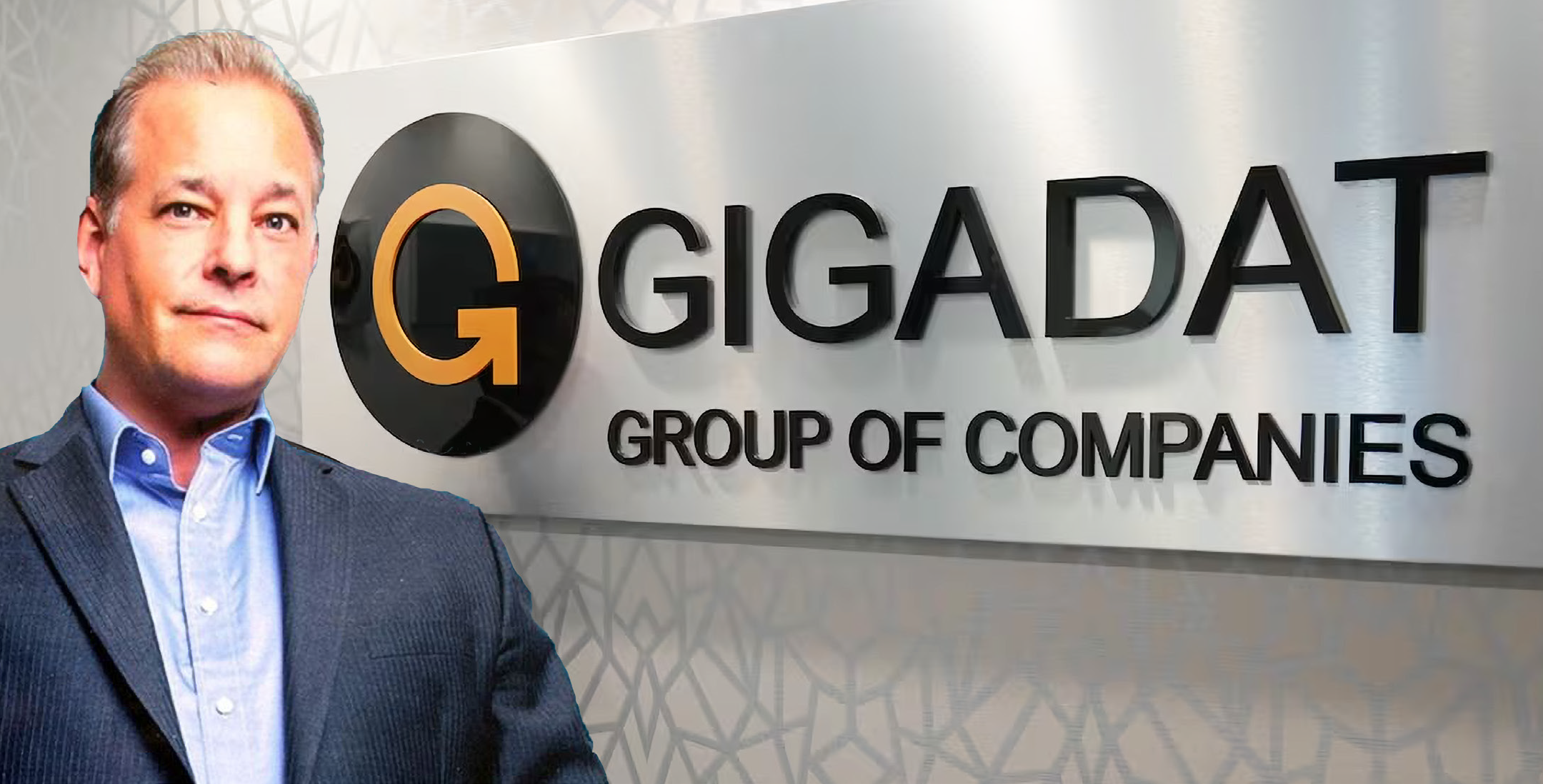
Riding the waves: 1-on-1 with Guy Fietz, CEO of Gigadat
GUY FIETZ, CEO AT CANADIAN PAYMENTS PROVIDER GIGADAT, OUTLINED TO EDITOR-IN CHIEF SIMON PLANZER HOW HIS COMPANY STAYS AT THE FRONT OF A HIGHLY COMPETITIVE.SECTOR
In this interview with the CEO of Gigadat, Guy Fietz, we learn how the company started in the gaming space, what key differentiators they rely on, how payment service providers can be part of the fight against the black market and what the future holds for crypto and gambling.
Simon Planzer: Perhaps we could start with the Gigadat story. How did the business come about and were you always in gaming??
Guy Fietz: We started out in the telecoms space, operating third-party billing where we established the first clearing house in Canada. We ran that business for around 15 years but saw things becoming more difficult. The big carriers were commoditizing everything and taking more and more of the revenue share. We could see a slow death in that in that market so I started to look at what alternatives there might be out there. We developed a direct debit solution and tried to find a sweet spot in different markets. Eventually we alighted on gaming and started seeing some uptake there so we refocused our efforts and the rest is history. Over the next several years we became a market leader and we have managed to retain that lead in the Canadian market. We’ve grown exponentially year over year for the last 10 years now and gone from an infancy level operation to a the sophisticated, advanced, and highly automated platform that we are operating today. In the process we have gone from around eight to 10 employees to 150 employees, and we’re now processing over a billion dollars a month.
SP: was there a key moment where you thought, oh, wow, this, this is going to work, this is going to be a winner?
GF: There really was. We were searching for multiple markets that would adopt the online debit solution and gaming was one that picked it up very quickly. We saw a couple of big-name brands out there come on board. Their original forecast was something to the effect of $500,000 in transaction value per month for the first year. But within the first two months that had grown to over $5 million in transaction value, and that was the point we knew we really had something. The adoption rate was just completely vertical, the consumers loved the option in the cashier pages, and so we knew we were on to something big.
SP: Some people may say payments is payments, it’s all the same, right? It’s processing transactions. So how can a payment provider gain a competitive advantage and stand out in that market?
GF: Our philosophy has always been to provide a consultative service and that’s what makes us different. A lot of the big processors out there are on “set it and forget it” mode. Once a merchant is integrated, then it’s up to them to utilize the tools available and access the reporting data. Whereas we’re always consulting with our merchants, trying to find out what they’re looking for, what their needs are and maybe what they don’t even know they need. We have also invested in our development capability. We have a development team of 55- 60 in-house developers building tools, features and functions for our merchants. We’re always striving to automate, automate, automate. So even though we still have that hands-on relationship with the merchant, in the background we’re running highly automated systems, and that’s one of our core strengths.
Another important part for us has been our 24/7 CSR center. Sometimes customers encounter problems or they get confused, and at that point they reach a brick wall with most payment service providers in this marketplace. That forces the consumer to try to figure out their own issue. What happened? How come I didn’t see the money transfer? Whereas we’ll hand hold the consumer through our CSR centers; we’ll see that a person has been having difficulty and we’ll either communicate directly with them or through a chat bot. By hand holding the consumer who has been having issues we see an eight to 10 percent uptick in completed transactions overall in a month. When you’re dealing with tenths of percentages making a difference to the merchant overall, that’s a huge difference. That’s a big differentiator for us.
SP: At the end of the day, it’s not too different to the online gaming operators. It’s all about the customer experience, right?
GF: Yeah, we’re doing what we can on our end to facilitate that seamless experience and allow that consumer to move their funds in and out as fast as possible. Speed is critical in the marketplace and compared to the performance speed of our competitors, typically we’re always faster on the ins and outs.
SP: Gaming is a highly regulated sector which brings a lot of compliance requirements for payment service providers. How do you deal with that in a way that it doesn’t create friction for the consumers with, for example, false positives?
GF: We’re fairly unique in that our Canadian network is just that: it’s a Canadian only network. It’s a closed loop system which means our transactions are between Canadian consumers, by and large. So, when it comes to financial crime, sanctions and blacklists, I’m not saying there’s no nobody in Canada that is blacklisted, but for a bad actor to get into our system, they would have to be a Canadian citizen and that does make it easier for us.
I agree, the scrutiny is becoming tighter and changes can happen overnight, so all market players have to be really aware of that compliance environment. We follow all of the blacklists and the AML checks, we adhere to the bank lists and the network interact lists. And we just don’t allow those bad actors in. You mentioned false positives, and we do have the ability for an individual to provide their personal ID in real time, so they can make attest to the fact that they’re not a blacklisted individual. We review individuals who come forward with a misidentification issue, and we can typically resolve that very quickly.
The bigger issue are the blacklisted countries and ultimate beneficial ownership rules, but we have very stringent due diligence processes. All of our onboarding procedures require corporate due diligence, UBO identification. So, so we’re really tight in that area.
SP: What are the big developments in gaming and payments that are keeping you awake, or where you see the opportunities?
GF: In Canada it’s really the change in the provincial regulatory frameworks. Regulation is becoming more and more stringent, which we’re fine with, but it does create potential friction within the operators. What we strive for is to maintain the customer experience, and without interrupting the customer experience/
SP regulators everywhere are constantly raising the bar with ID authentication, age verification, geo location and the rest. Have you sort of constantly adapt your product to meet those requirements?
GF: I’ve got to give credit to our technical and operational staff here. We’re very agile, all of our platforms are in house, and our developers are always looking to improve and adapt to the different frameworks. Whether that’s end user credit limits or frequency issues we look for ways to protect the consumer, but also mitigate risk with the operator itself by providing alerts and being in concert with them on those alerts and fraud. We’re not a regulator, but being intrinsic to the movement of money, we do have our fraud controls, red flags and alerts which are communicated with operators.
SP: Fraud and financial crime is one area; the black market is perhaps another. We hear regulators talk about recruiting all parts of the ecosystem in gaming to fight the black market. Is that something that you have been asked to do, or are keen to do? What’s your view on how payments providers can get involved?
GF: As far as the black market goes, we’re very stringent in our onboarding processes and we only work with licensed operators. We’re well aware that there’s an entire black market out there of operators that are unlicensed or in, what we can call, gray markets. These are sanctioned countries that are not necessarily blacklisted, but are maybe on the FATF grey list. We know that that can happen due to a regulatory change that puts an area offside, however, if that country or the regulatory authorities are determined to maintain compliance, then we know they’re going to work towards removing that gray status and we watch that very carefully. We have a no-fly zone in the black areas, so we steer well away from those.
The other interesting thing for us is the First Nation part of the market. That’s undefined as far as we’re concerned in Canada, so you could call it a gray market area. We’ve got positive legal opinions regarding it, but it’s somewhat of a contentious area for the provinces as well, so we acknowledge it but we don’t promote it. I think, the situation will be resolved as each of the provinces move towards a regulatory framework. Ontario’s had great success, Alberta is about to launch so we look forward to the rest of the provinces coming into that same regulatory framework.
SP: Regarding regulation, while it is necessary to some extent, it can also just be a burden, let’s face it. Have you come across regulations in the field of payment services of where you wonder: how does that help the consumer? You know, how does that even protect the consumer?
GF: Sure. There are several regulatory regimes out there now, where I guess I understand from a governmental standpoint, they believe they’re doing what’s best for Canadian citizens. That being said, we’re largely talking about restrictions so, you have to ask, if they’re not helping the consumer, who are they helping? Is it helping retailers? I’m not so sure. It’s adding a lot of weight and a lot of responsibility to transactions from start to finish. Each touch point needs to absorb that responsibility, from the banks to the networks to the payment facilitators to the consumers themselves. We’re following all the different regulatory aspects, we report to FinTrack regularly on transactions that trigger reporting requirements, but I’m not so convinced that some of the new regulatory aspects are helping.
SP: Crypto is clearly going to be on any payment provider’s to-do list. Thinking about it from a regulatory side, how do you think gaming regulators should proceed to open up the gaming market to crypto, given that it’s part of the world that we live in?
GF: Crypto is really interesting and we see it as a huge opportunity in the gaming space. There are a bunch of early adopters and while not many companies want to be on a bleeding edge, being on the leading edge is great. We we’ve been dipping our toe in the water for a while. Where some of our merchants around the globe are requiring to be paid out in crypto, we’ve been facilitating that for a number of years now. We’re pretty comfortable with the processes and we’re dealing with a pretty stable environment now. In the past there have been a lot of unstable environments, and you had to choose your exchanges carefully. We’ve always managed to work with a stable exchange so, never had any issues there.
Now you’ve got evolving consumer awareness, you’ve got all the big investment banks now participating in crypto, you know, Morgan Stanley, JP Morgan, BlackRock, etc. You’ve got wider adoption, you’ve got recommendations coming from very large investment banks for consumer participation in their in their wealth portfolios, etc. So, I think we’ll see wider adoption coming very shortly now, especially with Trump’s new Act coming in. All the banks are opening up to crypto in the United States, and Canada’s following, so you’re going to see a very wide consumer-based adoption across North America. That’s going to mean it takes in everyday transactions, and you’ve got early adopters that will be looking to standardize offerings with stable coins being the obvious one.
Canada just launched the CADD, its own digital currency and we’re looking to provide that solution to the Ontario market, for starters, and then roll it out to Alberta. I think stable coins are the way to go, whether it’s a pay in or pay out scenario. For now, consumers will still roll back to fiat currency, most likely on their settlements, but to play with crypto, knowing that it’s pretty much a dollar for dollar transactional value, I think that’s going to bring a lot of confidence in the consumer in the utilization of crypto. I am very excited about cryptocurrency adoption, and I’m interested to see what kind of adoption there will be in the gaming side as a standard. Because I do think it will become standard, much like when we first introduced the direct deposit solution in Canada.
SP: You have a strong focus on the Canadian market: the slogan on your website is “Connected with Canadians”. What are the advantages of focusing just on the Canadian market when you have another huge market right next door?
GF: The Canadian market is actually a very exciting market. It punches way above its weight from a user standpoint. Everyone is well educated in the market and there are not a lot of bad actors. Of course, the limiting factor is the actual size of the market. From a global standpoint, it is a smaller population, but, as I say, it punches above its weight, and as a consequence garners interest from global operators. As we’ve seen each province adopt regulated gaming, that has generated growth and, as the market leader, we’re in a good spot to keep growing with the market.
SP: Canada has a sizeable Francophone population. Are there any plans on your side to expand to the French-speaking world beyond Canada?
GF: We have many European-based customers and a European-originated salesforce. We’ve got a base now in Marbella, Spain, with a sales and marketing team there as well which helps a lot. But as far as expanding our consumer base into a global market, currently, no plan. We do have plans to look at a global crypto solution for the gaming market, and we’ll see how that develops. We’re looking at that roll out probably within the year.
SP: Gigadat is a sponsor of the IMGL autumn conference in Paris and we’re delighted to have you on board. I wondered what you were looking forward to about attending the event.
GF: That is going to be a spectacular event and I’m really looking forward to it. It’s important to be in tune with the legal aspect and being able to have some discussions with legal representatives is always very interesting. Just to hear what that part of our industry is focused on and what they’re seeing, it’s great to get those valuable insights over a nice dinner. And, of course, what better place than the Eiffel Tower? That’s going to be exciting, and we’re really looking forward to it.
SP: You mentioned your 24/7 CSR, and that just reminds us all that this is a 24/7 business. You have clients all over the world, you’ve got customers who are playing at all different times. The temptation must be to be always on yourself. How to you take a break and switch off from the business?
GF: I really love the water. I’ve got a boat, actually a couple of boats. I’ve got an 80-foot Sun seeker out of Vancouver and just love to get out on the water with friends and family and I get to be captain. I recently acquired a little fishing boat, and that’s my little adventure now. Heading up the West Coast to catch some salmon, that’s always an entertaining day, for sure.
Guy Fietz is CEO of Gigadat in Calgary, Canada
Read more 1-on-1 interviews here
Regulation & reality in Netherlands’ iGaming: 1-on-1 with Michel Groothuizen, Chair of KSA
An important link in the supply chain: 1-on-1 with AGEM’s Daron Dorsey