April 9, 2026
- Simon Planzer, Founder, Planzer Law
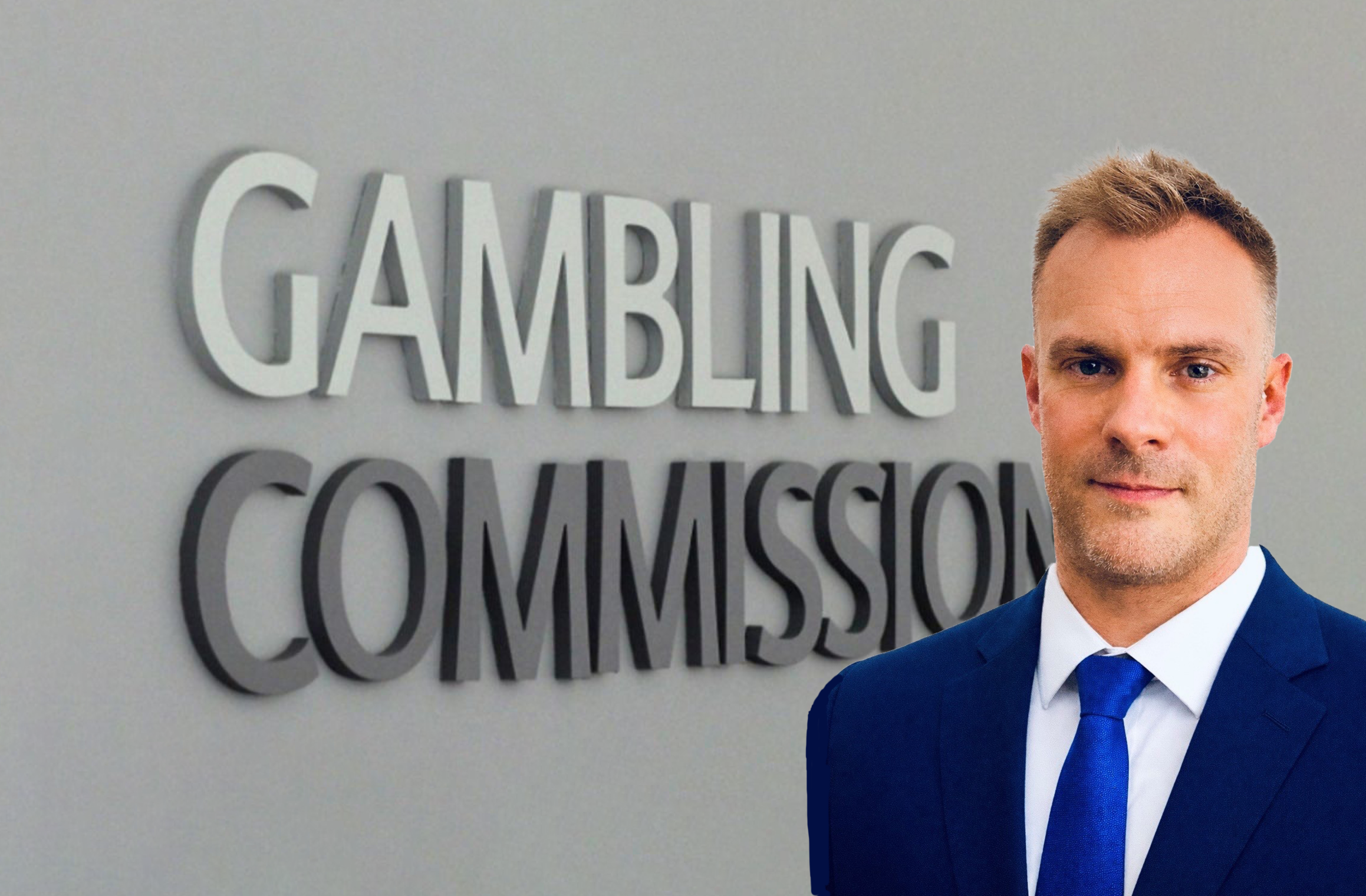
Winning by working together: 1-on-1 with UKGC’s Tim Miller
Interview with TIM MILLER, EXECUTIVE DIRECTOR AT THE UK GAMBLING COMMISSION
Tim Miller talked about tax, the funding of industry research and collaborative ways of tackling the black market to editor in chief, Simon Planzer
Simon Planzer: Let’s start with some details about you. What does your Executive Director role entail?
Tim Miller: I have a pretty broad portfolio comprising policy, research and statistics which has included overseeing the implementation of the UK government’s Gambling White Paper. For the last year or so I’ve also been acting executive director for operations, which covers all key regulatory functions: licensing, compliance, enforcement and so on. I also head up a new illegal markets program, funded by the additional government resource that was announced in the budget. It sounds a lot but it’s a really enjoyable job, but then my first job was regulating lawyers. After that everything else is easy.
SP: The UK is a long-standing regulated market and widely seen as a successful one. What is it about the market structure, the regulation or the way it has been managed that have been pivotal to that success?
TM: I think there are a few things. The first is that the 2005 Gambling Act was quite an enabling piece of legislation. Having worked in lots of regulators, there’s sometimes a frustration when the legislation ties the regulator’s hands and prevents them from being able to keep pace with changes that are happening in the industry that they regulate. In general, the Gambling Act enabled us to be able to adjust regulation to suit the circumstances and the reality of the world that we were regulating. That’s probably one of the reasons why it has stood the test of time. Typically, big pieces of legislation don’t survive unchanged for as long as the Gambling Act has. The fact that there haven’t been significant changes to the legislation in all that time is probably testament to the good job Parliament did at the time.
The other big success for the British gambling market is the fact that I think it allowed a diverse and very competitive market to develop. It’s one of the reasons why I think we have historically had pretty good channelization rates here compared to some other jurisdictions, because most normally accepted forms of gambling are licensed and regulated. Here in the UK, there’s a huge amount of consumer choice. So now, almost anything that a consumer would reasonably want to do within the gambling market, they’re able to do here within an environment that’s well regulated. That is something that a lot of jurisdictions look at. I know when talking to folks in the United States, for example, legislators say: Look, we don’t want to be an iGaming state. The reality is, in today’s world, you are an iGaming state, whether you like it or not. The question is, do you regulate it? Do you license it? Do you protect consumers? And do you get the tax revenue from it? I think Britain has shown, despite being a pretty small country, you can have quite a large, vibrant, regulated gambling market.
SP: You touch immediately on an extremely important point in the fight against illegal gambling. There are essentially two sides. One is the defense, what can you do as a regulator to go after the illegal offer. But there is also what we could call the offense, what can you enable as a jurisdiction to avoid people wanting to go elsewhere.
TM: Definitely. I would say there are actually three areas that your actions need address when you’re tackling the black market. One of those, absolutely, is enforcement, prosecution, taking action against criminals around the world that are seeking to exploit consumers here in Britain. Over the last year or so in particular, we’ve had a lot of success there with huge numbers of URLs removed, websites taken down and we’re making progress around prosecutions. That’s all incredibly important.
Then the second part is to look at those players that facilitate the operation and visibility of the illegal market and its ability to attract consumers. Increasingly we’re seeing social media, big tech companies, payment providers playing a role in that. Recently I highlighted some of the challenges we’ve had with groups like Meta, who have not, until now, done enough to stop the so-called “not on Gamstop” sites. These target incredibly vulnerable consumers and, if we’re going to have success in this battle, it is essential that companies like Meta and other tech companies, take their responsibilities seriously.
And I think the third piece of work that has to happen is looking at the demand side of the equation as well. What is it that encourages consumers to consider the illegal market and what can we do as a regulator, what can industry do and what can government do to keep our market attractive? What are the sorts of innovations we can encourage that protect consumers and meet our licensing objectives but also increase the appeal of the consumer offer.
One of the recent examples came out of some of the reforms in the UK Gambling White Paper which allowed casinos to have sports books on their premises for the first time. A few weeks back, I visited the Hippodrome in London, where they’ve opened Paddy’s Sportsbook in partnership with Flutter. It’s an amazing venue and the sort of place you would want to spend some time. You can eat, have a drink, watch sport and gamble in an environment that’s really appealing to consumers, but hasn’t exposed them to any greater risk. We’re really keen to promote innovations like that, so if the industry has new ideas, they should come and talk to us so we can look at what are the ways that we can support them and at the same time divert attention from the illegal market.
SP: You mentioned that jurisdictions have to choose between whether they regulate the market or just accept that it will exist offshore Do you think there are limits within a regulated market to the kind of products that we should be prepared to regulate, irrespective of whether people can use various means to access those products anyway?
TM: I do think there are limits. If a product is designed in such a way that is confusing to consumers, that exploits consumers then I don’t think something like that has a place in in the market. Now doesn’t mean that it can’t be made to be acceptable. I do think the experience here in Britain shows that there are certain types of bets, for example, that just shouldn’t be made available. And I think in the United States, you’re starting to see some of these concerns, particularly in relation to prediction markets, that just because you can offer a market on a particular eventuality doesn’t necessarily mean that you should. When people are betting/trading on whether Nicholas Maduro is overthrown, frankly, I don’t think something like that has a legitimate place in the market. Over the years in Britain, we have taken action on so called novelty markets that we felt didn’t have that place, where you can’t ensure their integrity. So, I do think there are limits, but a well-regulated, highly competitive and diverse market absolutely should be able to exist.
SP: There has been an increased focus recently on the black market, on the unlicensed market. Do you feel you have all the tools you need to tackle the black market?
TM: I think we’re getting there. We’re in a stronger position than we were even 12 months ago, and we will be getting more powers. The Crime and Policing Act is going through Parliament at the moment and that will give us the power to require internet service providers to take down illegal websites. So that is an important addition. But it’s not just about a wider range of tools. We need also to ensure we’ve got the resources to be able to secure a prosecution. You don’t want to start a prosecution and then find that you’re not resourced to be able to see it through.
But alongside the tools and resources, the partnerships that we have formed and are forming are going to be key. Whilst, I think, as a regulator, we’ve done a really good job we’ve got to be realistic. We are relatively small public body based in England, often trying to tackle networks that might be based in Russia or similar places that are often associated with organized crime, with international terrorism. Realistically the UKGC is not going to be able to take those networks down by ourselves. So having partnerships with other regulators, with law enforcement, with government and tech providers is going to be essential. One of the really positive developments that we’ve had here in the UK in the last few weeks is the government-launched Illegal Gambling Taskforce. This is a collection of major companies including Google, Mastercard, TikTok and Visa alongside law enforcement and gambling bodies set up to tackle illegal gambling. What’s really positive is that it’s bringing all these players together to ensure that we’re all working towards some shared objectives. If you are trying to dismantle and break up criminal networks, then those of us that are on the right side need to be equally well networked and partnerships like the Taskforce will be really important to ensuring that success.
SP: We often hear from regulators that they feel somewhat caught in the middle between the industry that sometimes does dumb things, and politicians who are under pressure from media or public opinion and the regulator is trying to steer a path between two competing interests. Is there a role, do you think, for the regulator to bring those together, an education role perhaps?
TM: As a regulator, you do often feel caught in the middle of a battlefield. Now, whether that’s between industry and government, industry and campaigners, there’s a whole range of players who have all got very strong views about gambling and its regulation. But I do think we have a role to try and bring those different parties together where we can and find areas where there can be collaboration and consensus. Within our legislation, we have a statutory role as the advisor to government on all things gambling related. So that gives us a vehicle to draw together the breadth of evidence. In the Gambling Act Review, for example, our advice to government, which was made public, sought to take a very expansive view of the entirety of the evidence base, whether that was evidence generated by industry or by campaigners.
The other area where regulators can play a really important part, is where you’ve got the space to be a bit of a thought leader. The speeches that that I give, what I say in them, is intentional. I don’t just want to show up and trot out the same old messages. I want to try and have an impact with what I’m saying, to get people thinking. There is a theme in a lot of my speeches, about where different parties can collaborate, where we can work with industry and where a whole range of people can work together. Hopefully the regulator is an independent voice and authoritative voice that can cut through some of the noise that often exists around industry debates.
SP: So the next obvious question is: was it your advice to the UK Chancellor to raise tax rates in the UK?
TM: Tax is one of the areas where typically we don’t give advice. That’s exclusively for the Treasury and for the Chancellor, and frankly, as a gambling regulator, we don’t have the expertise in economics and fiscal policy to have a reliable enough view. We did engage with government during that process to make sure that the way that the gambling industry worked was understood by officials. We wanted to give a sense as to where we see the risks are in the industry, and to draw on examples from other jurisdictions. The Netherlands was one place where there have been changes to tax, so we were able to talk a bit about the impact from that. But in the end, the government has to look at this through a much wider lens than we do. We bring a very narrow perspective as gambling regulator, the government has wider public policy considerations that they need to take into account.
The government has acknowledged the likely impacts from the tax change, particularly around a move to the illegal market. That’s one of the reasons why we were given, for the first time, taxpayer funding for some of our work in the illegal market. That will be important if, as a result of tax changes, we do see a large scale shift to the illegal market. If that happens, then I don’t think we as gambling regulator will be able to prevent it by ourselves, but we can certainly mitigate it. Going back to the Taskforce that I’ve mentioned, if we can work together, if we can look at both the supply side and the demand side then growth in the illegal market doesn’t have to be inevitable.
SP: We wouldn’t expect you to criticize the Treasury for their decisions, but it must make life more difficult to keep those high channelization rates.
TM: Being really open about it, whenever there is a significant external change that impacts the industry – whether that be economic, geopolitical or whatever – it is harder for a regulator than regulating in an environment where things are relatively calm and predictable. Any significant change in tax will slightly churn the environment and that does make regulation in that environment more complex. But frankly, in the 10 years I’ve been at the Commission, in the 25 years I’ve been in regulation, there’s probably been more periods where we’re operating in an environment of churn than in an environment of calm. Just look back over the last few years, the 2008 financial crisis, the pandemic and so on, there’s not been a significant time period where things have not been changing in this industry.
SP: Changing topic for a moment, research comes under your remit at UKGC. There has been a change recently to the way research is funded and a lot more of that money being directed by UKGC directly. I’d like to understand a little bit more about that.
TM: So, I think you’re referring to the Statutory Levy that the government brought in last year. Historically, research, education, prevention and treatment were all funded through a voluntary arrangement with industry, where industry made contributions to fund those things. There were a range of issues with that approach, independence being one that was often mentioned, and I think it did make it too easy for people to question the independence of some of the work, even perhaps when that wasn’t justified. The other big issue was that you didn’t have very good predictability of funding, so you couldn’t make long term funding decisions for some of this work. Under the Statutory Levy, all operators are required to contribute, then there is an independent commissioning arrangement that decides how the pot gets used for treatment services and things like that.
SP: What your research priorities looking forward? Where have you identified gaps in the data that you have to make decisions?
TM: I should say that only a small proportion of the funding will be spent by us. The rest will go to other commissioners in the system. The budget that we do have as a regulator we have sought to allocate in a really transparent way. We’ve published our research roadmap which sets out priorities broadly covering the consumer journey. There will be research around the early experiences of gambling and gateways into gambling; what sort of products people try before they move on to gambling, and how that shapes their relationship with gambling. Consumers are not a cohesive group: people that gamble on different products have very different experiences, very different drivers. It’s important we understand that and there’ll be a lot of research done around harm and vulnerability. Most of that will probably be done by others in the system, but we’ll look at that through a regulatory perspective. The other big area for us is the illegal market and continuing to build our understanding of that. In research we published last year we were clear that we did not feel we would ever be in a position to put a single figure on the size of the legal market because it’s something that inherently doesn’t want to be measured. But if we can keep developing our knowledge and understanding, then we can be more successful in how we how we tackle it.
SP: I should say that it is to your credit that UKGC makes this information public, including, as you said, your research priorities roadmap. I think it really adds to the transparency over how an authority is acting. But there is a perception that funding should not necessarily come direct from industry or it’s being seen more critical. What’s the background of this?
TM: I think the funding is only one aspect of it, it’s a broader question as to what should be the role of industry in research, not just in terms of funding it, but should they play any role? We’ve been clear in our research that we will engage with whoever we need to engage with to ensure that research is of the highest quality. And yes, that will include engaging with industry. Frankly, it would be a nonsense for us as a regulator to do research into gambling and into the gambling industry without engaging with the very businesses that work in it, day in, day out. Now, there are plenty of voices out there who have the view that industry should have no role in research at all. And there will be areas of research where actually it is better done completely at arm’s length to ensure that it stands up to scrutiny. But I think if you exclude industry from all research, frankly, I think that’s a slightly naive approach to take, in the same way as you cannot research gambling harms without speaking to people that been harmed by gambling. How can you make proper, evidence-based decisions without engaging with those that are working in the industry that you’re actually regulating? So, we will continue to engage with industry in research, even if others choose not to.
SP: You mention different voices out there some with strong views that there should be no engagement or involvement at all with the industry. Has the UK GC felt pressure to take the same view?
TM: We get that all the time, and I have to say it happens from both sides of the debate. You don’t just get it from academics or public health campaigners saying that industry shouldn’t be a part. There are voices within industry who suggest that there are certain academics, for example, that we shouldn’t engage with, and frankly, both of those positions are equally wrong. We will engage with whoever we need to to do the best quality work. Now, what we will also do is assess the weight that we put on that research and that evidence, and will be very open about areas where there is the risk of some bias creeping in. We said this in relation to the Gambling Survey for Great Britain, that we recognize that certain approaches to research can either increase or reduce the number of gamblers that are in your cohort, compared to others. We’re open about that. But for us as a decision maker we are seeking to understand where there are areas that should be given less evidential weight, where things are driven more by opinion than fact and evidence, That’s not a reason to disengage with particular audiences, because then you are immediately limiting the potential perspectives that you can take on board.
SP: Yes, because after all, there are quality criteria for research, and the mere fact that funding, or some funding may come from industry, doesn’t tell us anything about the quality of the outcome. To illustrate, pre-eminent scholars at Harvard University and Yale University have accepted industry funding for their research and it would be a stretch to claim that this fact alone would render their publications irrelevant.
TM: Money is one part of it because obviously the more funding you’ve got, the more research you can do. But money itself won’t automatically increase the quality of that research. For me, if we can all approach research with an open mind, not automatically to assume that because industry is involved, it’s not going to be of value, or equally, to assume that just because industry hasn’t been involved, that it’s a completely independent piece of work. Because, frankly, we have seen examples of bias on both sides. There can be a risk that if research is funded by a particular party, that it is open to the to the risk that bias could creep in. You’ve seen that over many years in places like the tobacco industry where the independence of some of the research was compromised by the funding sources. So those that are concerned about independence are not wrong to be concerned, but I don’t consider that it impossible to overcome. And I don’t believe that an effective research landscape completely excludes the industry from that work, because I just don’t think that leads to a high-quality evidence base.
SP: Another aspect I’ve observed in many jurisdictions is that research grants go only to researchers from that jurisdiction, and essentially nobody else is considered. Does the UKGC research roadmap permit researchers from around the world to participate?
TM: Absolutely, and we would encourage it. Over the years, we’ve worked closely with academics in the United States and with research organizations in Canada as well. I think that is probably one of the most interesting and exciting things about where we are now in our journey as a regulator. We’re dealing with such an international industry that there are so many opportunities to learn from different jurisdictions. For a long time, because the UK was such a big player and a mature market, that a lot of the learning flowed from us to other jurisdictions. But we’re increasingly in a position where we’re learning, for example, from the way that markets developed in the United States following the Supreme Court’s decision there several years ago. We’re learning from places like Ontario that has taken a very similar regulatory model to us but applied it in a slightly different societal context. Research is exactly the same, bringing in views from all over the world really does enhance what you do as a regulator. We are absolutely committed to international cooperation.
SP: The UK has been regulated for 20 plus years. It is very dynamic, as we’ve as we’ve said, but it’s relatively mature. What is it about the next five to 10 years that you’re looking forward to, that you think we should anticipate and you’re excited to tackle?
TM: If I go back to 2016 when I started, whilst we had some engagement with regulators and governments in other parts of the world, it sometimes felt because we were plowing a fairly lonely furrow on this stuff. We didn’t have many regulatory peers to bounce our idea off but that’s really started to change. We’ve had a couple of vehicles that have been great for that. I sit on the board of GREF, the Gambling Regulators European Forum, that brings together 40 jurisdictions across Europe to collaborate with each other. One of my team, Ben Haden, is President of IAGA, the International Association of Gambling Regulators. So, we are now engaging with gambling regulators on almost every continent. It really excites me that we’ve now got a proper peer group of regulators that we can really engage with, that we can share our learning with, but we can also learn from. I think that can only make for better regulation, particularly in a world where the people we regulate are going to be operating in many of those jurisdictions as well.
Tim Millar is Executive Director at the UK Gambling Commission
Simon Planzer is founding partner of Planzer Law and an executive committee member of IMGL