December 24, 2025
- Tanisha Khanna, Partner, Trace Law Partners
- Atharva Shende, Associate, Trace Law Partners
What India’s new regulations mean for online gaming
SURPRISE NEW ACT CAUSES MARKET CHAOS AND CASTS A CHILL OF UNCERTAINTY OVER REAL MONEY GAMES
Introduction
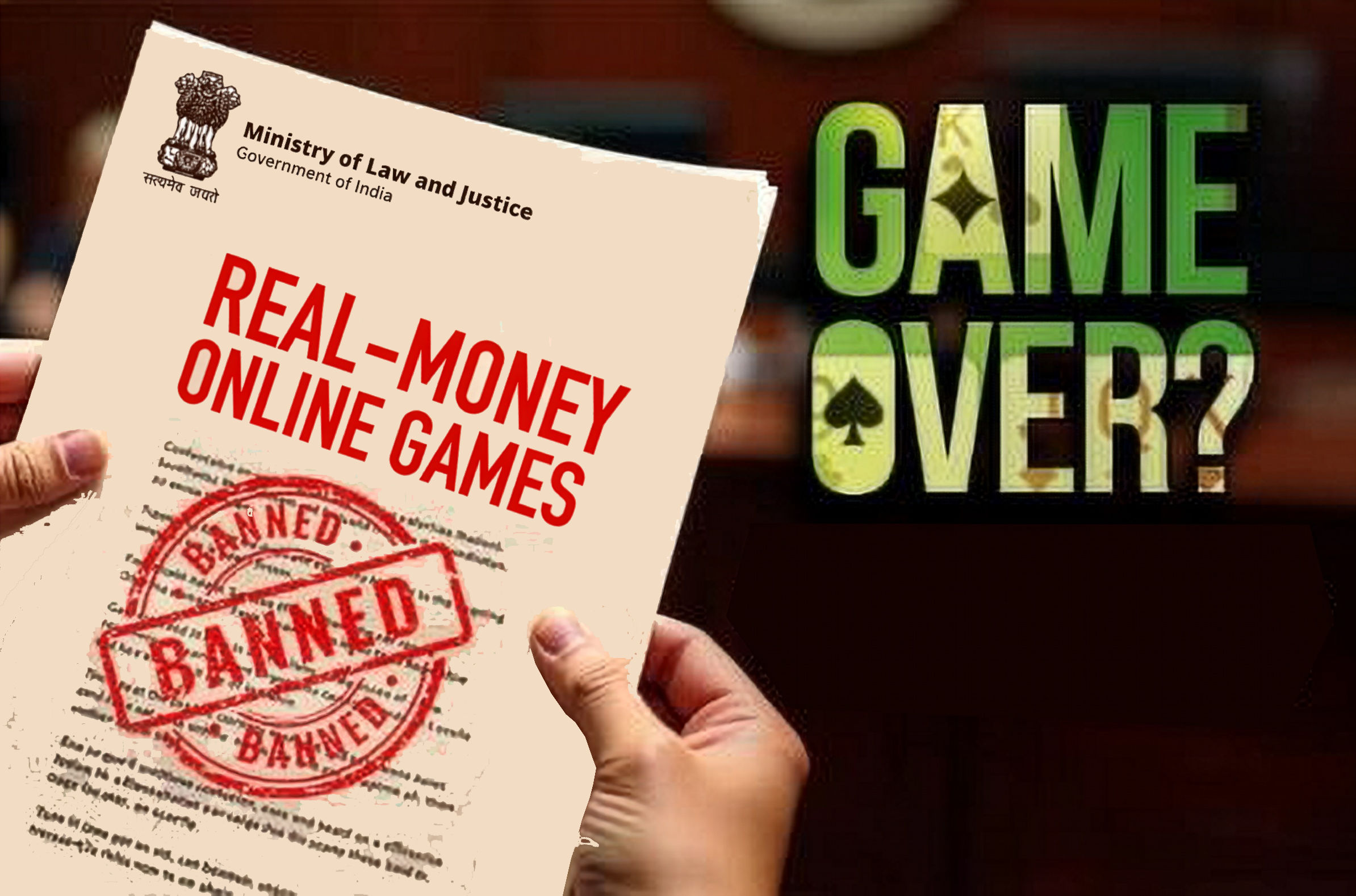
On August 22, 2025, the Promotion and Regulation of Online Gaming Act, 2025 (“Act”) received Presidential assent in India, paving the way for its notification as law. This article examines the impact of the new regulations on India’s real money gaming industry and explores the expected winners and losers.
The Act was introduced by the Central Government through the Ministry of Electronics and Information Technology (“MeitY”), the nodal ministry in charge of online gaming in India.[1]
Despite its title, the Act prohibits all online real money games, imposing penalties of up to three years imprisonment and INR 1 crore fines[2] (approx. US$113,000) for offering such games. However, it also proposes to legitimize the e-sports and social games industries, by recognizing and regulating them. Given the wide array of monetization models, there remains considerable uncertainty around the classification of games as permissible online social games versus prohibited online money games. There are also significant ambiguities in relation to the registration framework for online social games and e-sports under the Act and Draft Rules.
This Act marks a significant departure from the Central Government’s previous stance which was to regulate, instead of prohibit, the online real money skill gaming industry. It was introduced without any prior public or industry consultation, blindsiding India’s multi-billion dollar real money gaming industry. Within weeks of the Act’s introduction, major real money skill gaming operators ceased real money operations, pivoting to free to play and freemium models instead. The Act therefore hit a sector with 90+ million paying users worth US$3.7 billion in 2024, and which was projected to reach US$9.1 billion by 2029.[3]
The Act was immediately challenged before several High Courts[4], primarily on the grounds that it sought to ban real money games of skill, which are constitutionally protected activities, under freedom of trade and business guarantees[5]. These appeals have been consolidated before the Supreme Court.[6] The Supreme Court has not granted any interim (i.e., temporary) reliefs and has indicated that the challenge will now be placed before a three-judge Bench for hearing in January 2026..
On October 02, 2025, the Central Government introduced the draft Promotion and Regulation of Online Gaming Rules, 2025 (“Draft Rules”), the procedural rules for implementation of the Act, for public consultation. Upon feedback being collected, the final Rules and the Act will be notified as law. At present, it is unclear when that will be, but it is expected to be imminent.[7]
In this article, we examine the implications of the Act on operators, players and the overall gaming ecosystem in India. To begin with, we provide a brief overview of the existing regulatory framework for gaming in India and trace the key developments that culminated in the introduction of the Act.
Centre / State regulations, and the evolution of India’s gaming laws
In India, legislative powers are divided between the Central (federal) Government and the States. The legislative power to enact laws on betting and gambling[8], including on games of skill[9], vests with the State Governments.
Pursuant to this power, State Governments have introduced State-specific laws, most of which prohibit gambling, i.e., betting or wagering on games of chance, while exempting games of skill from these prohibitions. Games of skill have been recognized as constitutionally protected activities by the Supreme Court of India.[10] Games like Rummy, certain formats of Poker, and daily fantasy sports have been recognized as games of skill in India.
Only certain Indian States like Nagaland, Tamil Nadu, Andhra Pradesh, amongst others, specifically extended their laws to cover online gaming, leaving uncertainty as to whether other State laws, which prohibit gambling in physical premises termed ‘common gaming houses,’ could be interpreted as applying to online platforms. Additionally, there are jurisdictional limits to State laws with respect to online activities. Accordingly, there was a strong need for a pan- India law dealing with online gaming, and a federal regulator for the industry, apart from such State-specific legislations.[11]
Against this background, the MeitY was designated in charge of ‘matters related to online gaming’ on December 26, 2022.[12]
Thereafter, MeitY introduced certain amendments to India’s IT laws under the Information Technology (Intermediary Guidelines and Digital Media Ethics Code) Rules, 2021 (“IT Rules”), which sought to introduce a light-touch co-regulatory framework for the real money gaming industry, through designation of self-regulatory gaming bodies (“SRB”). Three SRBs filed applications for designation under the IT Rules, however by late 2023, the applications had still not been determined, amidst reports of Government concerns that SRBs would be “heavily influenced by major industry players.” News reports suggested that MeitY sought to directly regulate the industry instead.[13] Hence, this framework was never operationalised. Now, the Act and Draft Rules seek to repeal these provisions of the IT Rules[14].
Thereafter, the Act was introduced. The preamble to the Act suggests that it was introduced for the following reasons:
- To protect public health, particularly amongst the youth and economically disadvantaged, from harms caused by addictive game designs, manipulative features, bots, and undisclosed agents that lead to financial and other damage;
- To combat serious financial crimes such as fraud, money laundering, tax evasion, and terror financing,
- To address aggressive marketing and promotional strategies by online real money gaming platforms, including endorsements by celebrities and influencers, which increase their reach and impact.
- To overcome challenges posed by offshore gambling services that operate beyond the jurisdiction of individual States, leading to enforcement difficulties and inconsistent regulations across inter-State boundaries.
The provisions of the Act and Draft Rules are geared towards the above objectives.
Rules of the game: key features of the Act and Draft Rules
- Applicability
The Act applies only to ‘online games,’ and does not cover physical/brick and mortar gaming activity, which continues to be regulated under State-specific legislations. It also has extra territorial applicability, applying to both online gaming services offered from within India, as well as from outside the territory of India and offered in India[15].
Since only a Central law (and not State laws) can have extra-territorial applicability outside India, and given one of the key purposes of the Act is to address offshore gambling services offered from outside India, there was a need for a federal law explicitly applying to offshore gaming services.
- Establishment of Online Gaming Authority of India and Appellate Authority
The Act and the Draft Rules provide for the establishment of an online gaming authority of India (“OGAI”)[16]. The OGAI is contemplated to comprise of six persons, being a chairperson, as well as three members representing the Ministry of Youth Affairs and Sports, Financial Services, and Ministry of Information and Broadcasting[17]. The final two members must have special knowledge and experience with law[18].
The OGAI has both adjudicatory as well as regulatory powers and functions. As an adjudicatory body, it may inquire into complaints relating to online games, impose penalties, cancel or suspend registrations, and hear appeals from the Grievance Appellate Committees under the Act[19]. As a regulator, it is empowered to recognize, categorize and register online games, publish registries of such games, issue guidelines or codes of practice, and issue advisories, amongst others.[20] The Act prescribes penalties for non-compliance with orders and directions issued by the Authority.[21]
The Draft Rules designate the Secretary of Ministry of Electronics and Information Technology (“MeitY”) as the appellate authority (“Appellate Authority”) to hear appeals from certain decisions of the OGAI[22] relating to determination of online games, registration and cancellation of registrations.
Concerns have been raised regarding the concentration of Government members, and absence of independent members with experience in information technology, online gaming, consumer protection, amongst others, to bring balance to decision-making by the OGAI, and the Appellate Authority.
- Classification of online games and registration requirements
The Act establishes three categories of online gaming with distinct regulatory classification and registration requirements for each:
- Online money games:
The Act prohibits any person from offering any online money game or gaming service, amongst others.[23] An online money game is defined to mean an online game, irrespective of whether it is based on skill or chance or both, played by a user by paying fees, depositing money or other stakes in the expectation of winning which entails monetary and other enrichment in return of money or other stakes.[24]
Critically, “other stakes” encompass “anything recognized or equivalent or convertible to money, including credits, coins, tokens or virtual items”,[25] hence operators offering even social games with in-app purchases, deposits and payments in cash or kind must examine whether they amount to ‘other stakes’ and hence online money games.
The Draft Rules specify the criteria that will be used to determine whether an online game qualifies as an online money game, including whether the game involves money or stakes at any stage, including in-app purchases in the nature of wagers, and whether winnings, payouts or rewards are encashable or redeemable at any stage, amongst others[26].
The prohibition of all online money games marks a sharp departure from long-standing legislative and judicial recognition that real-money games of chance constitute gambling, while real-money games of skill are a constitutionally protected activity.
The criteria for determining online money games under the Draft Rules remain ambiguous, leaving uncertainty over which monetization models would cause a game to be classified as an online money game.
Apart from prohibitions on offering online money games, there are prohibitions on aiding, abetting, advertising, and transferring funds in connection with online money games, as elaborated upon subsequently.
- E-Sports :
The Act seeks to recognize and regulate e-sports, which has been largely self-regulated in India until now. The Act enables the Central Government to promote and develop the industry through the formulation of guidelines for its conduct, establishment of training academies, and introduction of e-sports within sports policy initiatives.[27]
Online games must meet certain criteria to be designated as such under the Act, including recognition under the newly introduced National Sports Governance Act, 2025 (“NSG”) and registration with OGAI constituted under the Act. Accordingly, the Act contemplates dual recognition under two parts of the law. The NSG introduces new legislation providing for sports to be ‘designated’ by the Central Government, and for federations to be established as governing bodies in relation to designated sports. This could pave the way for the institutionalisation of e-sports.
Additionally, online games seeking recognition as e-sports must be part of competitive events, and have outcomes determined by physical dexterity, mental agility, strategic thinking, amongst others. Such games must not involve the placing of bets, wagers or other stakes, including any winning out of such bets, wagers or other stakes,[28] however they may involve the payment of participation fees, and performance-based prizes.
Registration requirements
The Draft Rules provide for e-sports to be registered with the OGAI, which will issue a Certificate of Registration valid for up to five years upon verifying compliance with these requirements[29]. The OGAI will make a determination that an online money game qualifies as an e-sport prior to issuance of the certificate.[30] A member of the Ministry of Youth Affairs, and Sports, the nodal ministry in charge of e-sports, must be present at such a determination and concur with the classification.[31]
Registration certificates are liable to be cancelled in certain instances, such as material change in the nature of the e-sport, violation of directions or codes issued by the OGAI, amongst others.[32] It may also be suspended in certain scenarios, such as where an inquiry is pending against the operator.[33]
It is unclear whether foreign operators are eligible for registration, and clarity in this regard is sought. There is at present no specific prohibition under the Act on offering unregistered e-sports which are not in the nature of online money games. However, the OGAI may subsequently issue such prohibitions through directions, orders or codes of practice, which may attract penalties.
- Online social games (“OSG”):
The Act seeks to recognize and regulate OSGs, and facilitate their development through initiatives such as the creation of programs to support their development, and undertaking awareness programs to highlight positive uses[34].
Online games must meet certain criteria to qualify as OSGs. They must not involve stakes or winnings in return for money or other stakes, though they may be accessed through a subscription or one-time access fee, as long as such payment does not amount to a wager/stake. They must be offered solely for entertainment, recreation or skill-development.[35] It is unclear whether this criteria is exhaustive, and hence whether any social games with additional features, such as real money prizes, would still qualify as online social games under the Act.
Registration requirements
Under the Draft Rules, registration of online social games with the OGAI is voluntary rather than mandatory.[36] There is at present no prohibition on offering unregistered social games, however such prohibitions may subsequently be introduced through directions by the OGAI. Additionally, registered social games may be advertised and represented as being registered under the Act.[37]
It also appears that registered social games may be eligible for certain support and incentives.[38] It is unclear whether foreign operators are eligible for registration.
The Draft Rules require an application to made by the online game service provider in the prescribed form, and empower the OGAI to seek information such as the age group to whom the online game is intended to be offered, revenue model, user safety features, and grievance redressal provisions, amongst others.[39] Applicants must provide an undertaking that they will not contravene applicable laws.[40] Subsequently, the OGAI will make a determination that the online game is not an online money game.[41]
The need for a registration mechanism has been questioned by the industry, which has highlighted concerns about registered service providers being disadvantaged as compared to unregistered providers, since only registered service providers appear to be subject to certain obligations such as grievance redressal, under the Draft Rules.
- Prohibitions in connection with online money games
Apart from the operators, i.e., the online game service providers, service providers to online money games involved in their offering and advertising, and investors in such businesses, may face liability under the Act. This is a novel feature absent from most State anti-gambling statutes, and appears to have been introduced to impose accountability on the wider gaming ecosystem.
- Advertisement prohibition
The Act prohibits any person from making, causing to be made, or otherwise being involved in the making or causing to be made of any advertisement in any media, including electronic modes of communication, which directly or indirectly promotes/ induces any person to play any online game, or indulging in any activity promoting online money gaming.[42]
In the first instance, this offence is punishable by imprisonment for up to two years, or with a fine of up to INR 50 lakhs (approximately US$56,400), or both.[43]
The scope of this prohibition is notably expansive, extending to entities that are “otherwise involved in the making or causing to be made of any advertisement” and those engaged in “any activity promoting online money gaming.” In practice, this could also encompass intermediary platforms – such as social media networks or app stores – that merely host advertisements for real money games.
- Prohibition on transfer of funds
The Act prohibits banks and financial institutions from facilitating any transaction or authorisation of funds towards payment for any online money gaming service.[44] At the first instance, this offence is punishable by imprisonment for up to three years, or with a fine of up to INR 1 crore (approximately US$113,000),[45] or both.
In order to operationalise this prohibition, the Government has convened meetings with banks, fintech companies and other financial sector participants to discuss implementation measures, including blocking payments to prohibited platforms, preventing circumvention through alternative channels, and facilitating refunds of customer balances.[46] The Draft Rules provide safe harbour to banks and financial institutions, amongst others, for the limited purpose of remitting back user funds.[47]
- Abetment liability
The Act also prohibits “aiding, abetting, inducing or otherwise indulging or engaging in offering” online money games and online gaming services.[48] This offence is punishable by imprisonment of up to three years, or with a fine of up to INR 1 crore (approximately US$113,000)[49], or both.
This expansive language potentially reaches the entire gaming ecosystem: app stores, payment processors, advertisement and investors. The scope of aiding and abetting is unclear under the Act in terms of what nature of services offered to online money gaming services may amount to aiding and abetting. Service providers and investors to the online money gaming companies must evaluate their potential liability under these prohibitions.
- Grievance redressal system:
The Draft Rules seek to establish a three-tiered user complaint mechanism for registered online game service providers offering registered social games and e-sports. The first tier is the online game service providers own internal grievance redressal mechanism, the second tier is the Grievance Appellate Committees (GACs)[50] constituted under the IT Rules, and the third tier the OGAI.
Given the broad nature of the definition of ‘grievance,’ it may include service-related complaints, unfair practices, amongst others.
Industry concerns have been raised in relation to limiting the grievance redressal mechanism to only registered service providers, and the composition of the GACs not comprising persons with domain expertise required to address gaming industry concerns.
- Adjudication and penalties
The Act imposes penalties for failure to comply with directions and orders issued by the Central Government, or the OGAI of up to INR 10,00,000 (Rupees Ten Lakhs) (approx., US$11,273)[51]. Penalties may also include suspension or cancellation of registration, and prohibitions on offering, facilitating, or promoting such online game. Additionally, the OGAI may impose penalties for other non-compliance under the Act or Draft Rules.[52]
The Draft Rules set out the procedure to be followed before any penalty is imposed. Proceedings may be initiated on the basis of a complaint or by the OGAI of its own volition.
The rules require the OGAI to issue a notice containing particulars of non-compliance, and to provide the online game service provider with an opportunity to be heard prior to determining whether an inquiry must be carried out. If the OGAI believes there are grounds for holding an inquiry notwithstanding such submissions, it may proceed with the inquiry, and hear and decide the complaint within 90 days. It may thereafter impose penalties, suspend or cancel registration certificates, and issue such orders of prohibition[53]. While determining the quantum of penalties, the OGAI is required to take into account factors such as the amount of loss caused, repetitive nature of non-compliance, and gravity of the offence, amongst others.[54]
- Blocking
The Act further provides that in case of violation of its provisions, any information generated, transmitted, received, or hosted in connection with online real money gaming may be blocked from access.[55] This blocking power applies notwithstanding Section 69-A of the Information Technology Act, 2000 (“IT Act”), effectively creating a standalone mechanism for restricting such content. Platforms that host this material may therefore be subject to blocking orders issued under the Act.
Closing reflections on the new regime
As India’s real money skill gaming industry reels from the new legislation, the Act provides promise for social games and e-sports, in terms of seeking to legitimize and provide regulatory certainty for these industries. India’s online real money skill gaming industry is revisiting its game formats and monetization models to adhere to the new regime.
While the Act was introduced overnight with the Draft Rules following quickly thereafter, questions remain as to how the Government implements these provisions in practice, how the OGAI will categorize and classify games, and how the registration framework will evolve. As pointed out, there continue to remain significant ambiguities in terms of which monetization models will tip the scales in favour of an online game amounting to an online money game, how the Online Gaming Act will interplay with State-specific regimes, amongst others.
All eyes are on the Supreme Court hearing challenges to the constitutional validity of the Online Gaming Act, as well as the constitutional validity of prohibitions on online games of skill. Any holdings from the court will shape how this new central framework ultimately operates.
The coming months and years will determine whether the reset to India’s gaming law will bring about clarity and stability, or usher in further complexity.
Tanisha Khanna is a Parter at Trace Law Partners
[1] MeitY is the Central Ministry in charge of ‘matters relating to online gaming’ under the Government of India (Allocation of Business Rules), 1961
[2] Promotion and Regulation of Online Gaming Act, 2025, s. 9
[3]https://brandequity.economictimes.indiatimes.com/news/research/indias-online-gaming-sector-may-cross-usd-9-bn-by-2029-report/119250363; last visited 22 November 2025
[4] Head Digital Works Private Limited & Anr. v. Union of India, W.P. (Civil) No. 26233/2025, Karnataka High Court; Bagheera Carrom (OPC) Pvt. Ltd. v. Union of India, W.P. (Civil) No. 13449/2025, Delhi High Court; Clubboom 11 Sports & Entertainment Private Limited v. Union of India, W.P. (Civil) No. 34900/2025, Madhya Pradesh High Court.
[5] State Of Bombay vs R.M.D. Chamarbaugwala And Ors. AIR1956BOM1
[6] T.C.(C) No. 000133/2025 Head Digital Works v Union of India
[7] https://www.thehindu.com/business/real-money-gaming-ban-to-be-formally-notified-on-oct-1-vaishnaw/article70067293.ece; last visited 22 November 2025
[8] Entry 34, List II, Constitution of India
[9]All India Gaming Federation vs The State of Karnataka & Ors, WP 18703/2021, Junglee Games India Pvt. Ltd. & Anr. v The State of Tamil Nadu & Ors, WP Nos.18022, 18029, 18044, 19374, 19380 of 2020, 7354, 7356 and 13870 of 2021
[10] Dr. K.R. Lakshmanan v. State of Tamil Nadu & Anr., (1996) 2 SCC 226
[11] The scope of State Governments’ and Central Governments’ respective legislative powers with respect to gaming activity is the subject of a pending matter before the Supreme Court in the case of DG GST v. Gameskraft Technologies Pvt. Ltd., SLP (C) No. 19366-19369/2023.
[12] Amendment to Government of India (Allocation of Business) Rules, 1961
[13] Removed
[14] Rule 11, Draft Rules
[15] Section 1, Act
[16] Rule 5, Draft Rules
[17] Rule 6(b), Draft Rules
[18] Rule 6(c), Draft Rules
[19] Rule 10, Draft Rules
[20] ibid
[21] Section 8, Act
[22] Rule 2(1)(c), Draft Rules
[23] Section 5, Act
[24] Section 2(1)(g), Act
[25] ibid
[26] Rule 13(1), Draft Rules
[27] Section 3(1), Act
[28] Section 2(1)(c), Act
[29] Rule 16, Draft Rules
[30] Rule 13(1), Draft Rules
[31] Rule 13(3), Draft Rules
[32] Rule 18, Draft Rules
[33] Rule 19, Draft Rules
[34] Section 4(1), Act
[35] Section 2(1)(i), Act
[36] Rule 12, Draft Rules
[37] Rule 16, Draft Rules
[38] Draft Rule 18(7)
[39] Rule 12, Draft Rules
[40] Rule 12(4)
[41] Rule 13(1)
[42] Promotion and Regulation of Online Gaming Act, 2025, § 6.
[43] Section 9(2), Act
[44] Section 7, Act
[45] Section 9(3), Act
[46] https://www.business-standard.com/finance/news/govt-meet-banks-fintechs-online-gaming-act-rollout-august-29-125082801443_1.html
[47] Rule 24, Draft Rules
[48] Section 5, Act
[49] Section 9(2), Act
[50] Draft Rules, Rule 23; Information Technology (Intermediary Guidelines and Digital Media Ethics Code) Rules, 2021, Rule 3A
[51] Section 12
[52] Rule 23(8), Draft Rules
[53] Rule 21, Draft Rules
[54] Rule 21(9), Draft Rules
[55] Section 14, Act