July 4, 2026
- Dr. Andreas Woerlein, Rechtsanwalt (German attorney), Melchers
- Dr. Matthias Spitz, Partner, Melchers
Sweepstakes: tension between virtual gaming and regulated gambling
DR. ANDREAS WOERLEIN & DR. MATTHIAS SPITZ CARRY OUT A COMPARATIVE LEGAL ANALYSIS WITH A SPECIAL FOCUS ON GERMAN GAMBLING LAW
The sweepstakes casino model is one of the most remarkable innovations in the digital entertainment sector in recent years. It combines casino-like gaming experiences with a sophisticated dual-currency system that offers users a genuine and practical option to participate for free, thereby structurally distinguishing itself from traditional gambling. This conceptual approach has attracted millions of users worldwide and demonstrates that digital entertainment and responsible gaming need not be mutually exclusive.
Nevertheless, it would be misguided to ignore the regulatory challenges associated with this model. In the United States, several states (including most recently Maine[1] and Indiana[2] in early 2026) have enacted specific prohibition laws after operators sometimes structured the concept in a way that bordered on de facto gambling. The consequence: Where the dual-currency system is not properly structured or the option for free participation is not genuinely provided, offers risk being classified as illegal gambling. Last year, the California legislature enacted an amendment of the penal code which even prohibits online sweepstakes that simulate casino-style gambling, utilizes a dual currency system and awards cash equivalents.[3]
The picture is more nuanced in Germany. Unlike in the U.S., there are currently no specific regulations in this country that explicitly cover or prohibit sweepstakes offerings. This creates room for legally compliant offerings, but at the same time requires operators to design their model carefully and in accordance with the existing requirements of the Interstate Treaty on Gambling 2021 (the “IST 2021”). An unchanged or insufficiently thought-out approach runs the risk of falling under national gambling regulations and thus being prohibited. Germany therefore offers a genuine opportunity for sweepstakes operators, but only for those willing to design their offerings to be legally compliant from the outset.
This article first provides an overview of the sweepstakes model and its basic structure, then examines regulatory developments in the U.S., and finally delves into the German legal landscape in detail. The focus is on the question of under what conditions a sweepstakes offering is permissible in Germany and which specific requirements, particularly those under gambling law, must be observed.
The sweepstakes model: basic structure and forms
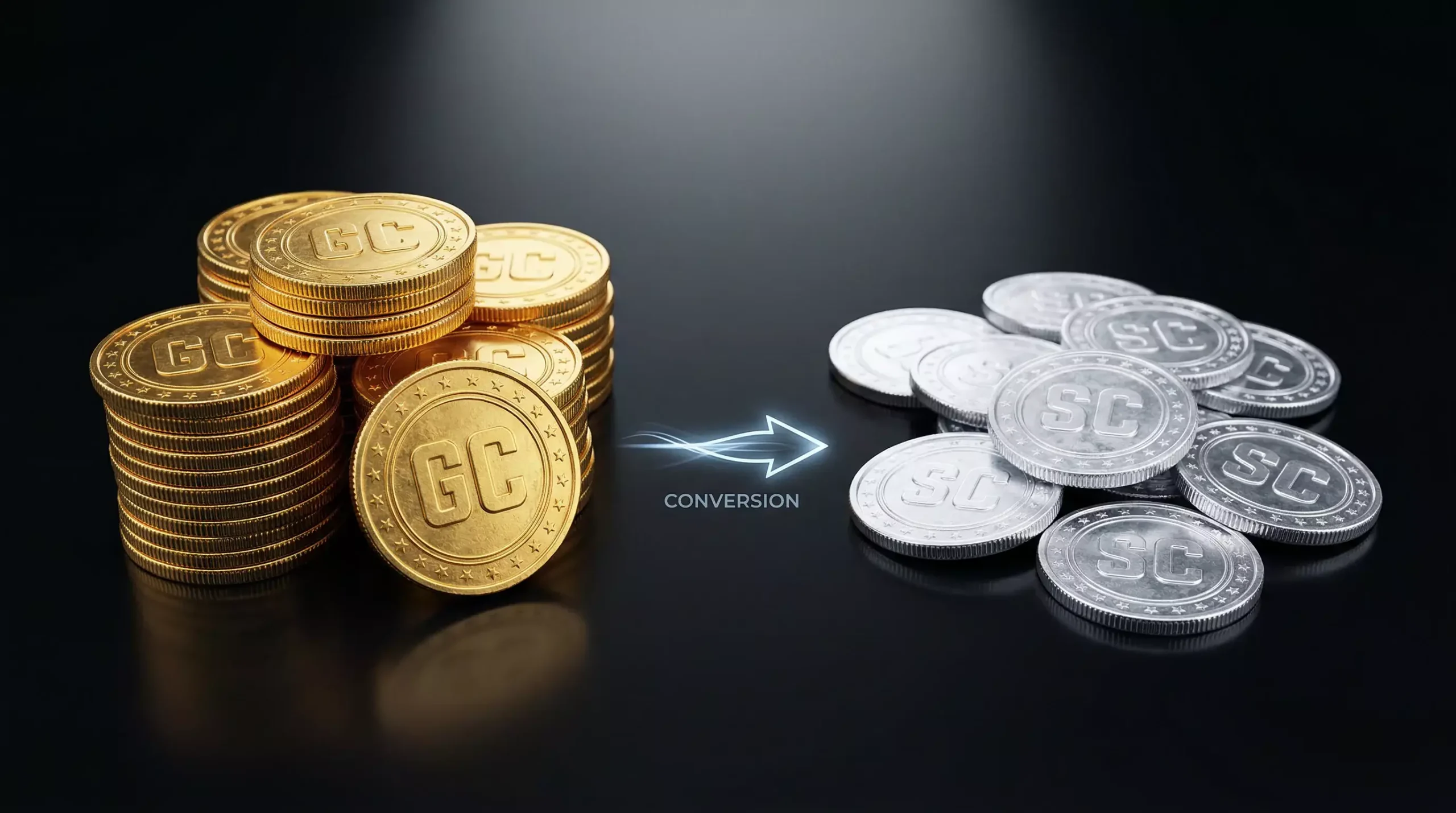
Sweepstakes casinos are online platforms that offer players a casino-like experience without being classified as gambling in the legal sense. Their defining feature is the so-called dual-currency system: on these platforms, two different virtual currencies typically coexist. One of these – hereinafter referred to as “Social Coins” – is used exclusively for gaming entertainment and cannot be exchanged for either cash or prizes of monetary value. The other currency (hereinafter referred to as “Sweep Coins”) can, however, be redeemed for cash or non-cash prizes under certain conditions and is thus the component relevant under gambling law. Classic casino games such as virtual slot machines are replicated on the platform and played by registered users. The games are played entirely with virtual currency, not with real money. Depending on the structure of the offering, both types of coins can be acquired free of charge in a variety of ways. Only Social Coins can also be purchased with real money. As soon as a player receives Sweep Coins in addition to purchasing Social Coins, this may have consequences under gambling law, depending on the specific case.
Regulatory dynamics in the United States: from tolerance to prohibition
The sweepstakes concept originated in the North America, where it has been known as a marketing tool for decades. The legal structure of free participation (e.g., by mailing in a postcard) was long considered an effective means of circumventing the strict gambling laws of most U.S. states. However, due to the increasing success and diverse formats of sweepstakes offerings, various states have responded with regulatory action in recent months. As early as 2025, six states[4] took measures against sweepstakes casinos.[5] This trend has accelerated further in 2026. Formal bans on sweepstakes casinos were enacted in the states of Maine and Indiana.[6]
Particularly revealing are the legislative definitions used in these laws. The legislation in Maine, for example, explicitly defines dual-currency systems as well as direct consideration, thereby targeting the business model of sweepstakes casinos.[7]
“Online sweepstakes game” means any game, contest, or promotion that: A. Is available on the Internet and accessible via a mobile phone, computer terminal, or similar access device; B. Uses a dual-currency payment system; and C. Simulates casino-style gaming, including, but not limited to, slot machines, poker, and other table games, lottery games, bingo, or sports betting.[8]
The penalties for violating this provision are also severe: “A person who operates or promotes an online sweepstakes game, or supports the operation or promotion of an online sweepstakes game, commits a civil violation. 1. Fine. A person who violates this section is subject to a fine of not less than $10,000 and not more than $100,000. All fines imposed pursuant to this section must be collected by the unit and distributed to the Gambling Addiction Prevention and Treatment Fund established in Title 5, section 20006-B.“[9]
The most recent legislative response followed several cease-and-desist orders from state regulatory agencies and also extends to hearings on prohibition laws in other states, such as Florida and Tennessee.[10]
Overall, it can be concluded that the U.S. has taken a clear direction: Sweepstakes casinos are no longer tolerated as harmless marketing games, but are increasingly viewed as de facto gambling that requires appropriate regulation and licensing or must be banned.
The legal situation in Germany: Sweepstakes in light of the IST 2021
In contrast to the dynamic developments in the U.S., Germany has so far lacked specific legal regulations for sweepstakes offerings. However, this does not mean that this area is completely unaffected by existing regulations. Rather, it must be examined whether and to what extent sweepstakes platforms can be subsumed under the existing IST 2021.
The IST 2021, which has been in effect since July 1, 2021, forms the legal framework for regulating gambling in Germany, including a licensing system for private operators of sports betting, virtual slot machines, online casino games, and poker. If an activity qualifies as the operation of online gambling and allows players in Germany to participate, it is either prohibited or subject to licensing.
However, the provisions of the IST 2021 do not provide for licensing of online games other than those specified in the regulation. These can be broadly categorized into lotteries, sports and horse racing betting, virtual slot machines, and online casinos. Sweepstakes as such are not expressly covered therein.
The crucial question is: Do sweepstakes meet the legal definition of gambling within the meaning of Section 3(1), Sentence 1 IST 2021? The legal definition of gambling is: “Gambling exists when, within the framework of a game, a fee is charged for the acquisition of a chance to win and the decision regarding the win depends entirely or predominantly on chance.”
This definition gives rise to three elements that must be cumulatively present for an activity to be subject to German gambling regulations: (1) a consideration (payment); (2) the decision regarding the win depends entirely or predominantly on chance; and (3) the consideration is given in exchange for a chance to win a monetary prize.
Social sweepstakes casinos can therefore be offered in Germany without a gambling license if one of the aforementioned elements is not met, and the offering would consequently not fall within the scope of the IST 2021. It should be noted, however, that when reviewing an offering, a comprehensive assessment of all elements is always conducted by the regulator, the Joint Gambling Authority of the German States (abbr. “GGL”). It is therefore risky to base the offer solely on a single missing characteristic of the definition of gambling.
- The element of consideration
The existence of consideration is doubtful in the context of sweepstakes, as Sweep Coins cannot be purchased directly with real money. Nevertheless, at least an indirect acquisition through the purchase of Gold Coins is possible, which is why a specific asset could be assumed in certain scenarios.
It should be noted that German courts tend to set the threshold for the significance of the consideration low or reject such a threshold entirely. Although the legal issue has not yet been conclusively clarified by case law, an amount exceeding 50 cents is very likely to be classified as “significant” by regulatory authorities.[11] A threshold of 50 cents has been accepted in case law as the de minimis threshold,[12] although more recent decisions also take the temporal aspect into account and consider a fee to be significant if the player can lose approximately 10 euros per hour[13] .
However, a significant line of administrative case law argues against the assumption of a fee. Several administrative courts have ruled that the IST 2021 applies only if a fee is charged for participation; which is not the case if, in addition to the paid participation option, an equivalent, practical, and free alternative (e.g., via postcard, email, or the internet) is offered.[14] This is precisely what the sweepstakes model enables: customers have the option to receive Sweep Coins for free by sending in a postcard or using similar methods. Based on this case law, it can therefore already be argued that there is no stake in the required sense, since the customer is given the opportunity to participate in all games free of charge.
- The element of chance
To assess whether the win depends predominantly on chance, German courts apply a “holistic assessment” that takes into account the game rules, mechanics, and typical circumstances of the game.[15] Based on the available game descriptions, the Sweep Coins game mode (just like the Gold Coin mode) depends on elements of chance, as the simulated games of chance use corresponding random mechanisms.
This criterion is therefore likely to be regularly met in sweepstakes offers. It is therefore all the more important that at least one of the other two elements of the offense – the consideration or the direct link between consideration and the chance of winning – is absent.
- The element of a direct link between payment and the chance of winning
To qualify as gambling under the IST 2021, there must always be a direct link between the stake and the acquisition of a chance to win.[16] This link is unlikely in the sweepstakes model for two reasons: First, customers can also generate Sweep Coins for free. Second, and most importantly, customers should not automatically receive Sweep Coins when purchasing Gold Coins. Here, operators would need to make appropriate adjustments for the German market.
The offer is also unique in that the customer does not have to spend any money, as they can receive free coins in both game modes. When players do spend money on a package of Gold Coins, they do so to obtain more Gold Coins for an enhanced gaming experience. Since these Gold Coins have no monetary value and no legal secondary market exists, they cannot be considered an asset. Even if a player purchases Gold Coins and is exclusively interested in Sweep Coins, they always receive the specified number of Gold Coins first, which calls into question the directness of the connection between the monetary wager and the acquisition of Sweep Coins. Furthermore, if the indicated adjustments are consistently implemented and adhered to, the operator can break the required link between the wager and the acquisition of a chance to win, and it can be legally argued that no gambling within the meaning of the IST 2021 is taking place.
Design recommendations for sweepstakes providers in the German market
- The importance of continuous compliance
The outcome of the legal review can only be preliminary. In recent years, regulatory authorities in Germany have stepped up their efforts to combat illegal online offerings. The co-chair of the GGL and the head of its enforcement division have announced a tough stance against unauthorized online offerings in public speeches. This explicitly applies to offers that are disguised as “sweepstakes” but actually constitute illegal gambling. Operators wishing to operate sweepstakes in Germany must therefore strictly adhere to youth and consumer protection regulations and ensure a clear distinction from gambling law.
- Terminological care
A key design consideration concerns the language used on the platform: gambling-related terms such as “stake” or “bet” should be consistently avoided on the platform and in advertising. Although social casinos are generally permitted, the term “casino” should be used sparingly and always only in conjunction with the prefix “social” – i.e., as “social casino.” The same likely applies to terms such as “slots”.
- Design of the currency system
It must be impossible at all times to purchase Sweep Coins directly with money. Any design of the Sweep Coin distribution system that violates this may be classified by the GGL as illegal gambling. The integrity of this separation principle is the foundation of the entire legal framework.
With regard to pricing for Gold Coins, it is recommended the lowest price below 1 euro or 2 euros[17] is set to provide consumers with a low-barrier entry point. Furthermore, customers should be able to view an overview of their total expenditure at any time. While active notification after a monthly amount (e.g., 50 or 100 euros) is not strictly required, it is advisable from a consumer protection perspective.
- Transparency toward users
With regard to the prices of Sweep Coins, complete transparency should always be maintained for customers. This means that it should be specified until when a given price is available for a specific quantity of coins. Customers should be informed in a timely manner of any changes regarding availability and price.
Furthermore, the platform’s visual design should not give the impression that cash or non-cash prizes can be won by spending money. The social casino aspect and the fact that the customer never has to spend money should be emphasized.
- Advertising communication
When advertising the offering, care should be taken to ensure that minors are not specifically targeted. The advertising message should generally focus on the social casino game mode with Gold Coins. Any active reference to a direct link between the purchase of Gold Coins and the potential acquisition of Sweep Coins should be avoided.
All offers on the German market must be designed to be as consumer-friendly and transparent as possible with regard to prizes. Care should be taken to ensure that only prizes that can actually be won are displayed and marketed. The focus of advertising should be on the social casino with the Gold Coins, as this represents the core service.
- Other applicable areas of law
Although sweepstakes offers adapted to the German market cannot be classified as gambling within the meaning of the IST 2021 and the specific provisions of the Money Laundering Act for online gambling are not directly applicable, a money laundering obligation may arise from the use and storage of Sweep Coins as a virtual currency and the possibility of redeeming them for prizes. It is therefore advisable to implement a deletion requirement for certain coins to avoid banking transactions.
In addition to gambling law, sweepstakes operators in Germany are subject to a number of other regulatory areas that warrant careful attention. With regard to data protection law, the following applies: To the extent that an operator collects and processes personal data as part of its offering, the General Data Protection Regulation (GDPR) applies, which is directly applicable in Germany and supplemented by the Federal Data Protection Act (BDSG). Since the planned services are targeted at the German market and a German-language website is operated, the territorial scope of the GDPR is met. The operator is therefore obligated to comply with the requirements of the GDPR; in particular the principles of data processing under Article 5 of the GDPR.
Under competition law, the operator must, among other things, comply with the Unfair Competition Act (UWG), which ensures fair competition and prohibits misleading, harassing, or deceptive advertising. An aggressive business practice that is likely to induce the consumer to make a decision they would not otherwise have made is considered unfair.
In consumer protection law, the following must also be noted: In the case of in-game purchases, the general 14-day right of withdrawal for digital content does not apply, as it expires upon access to the digital content. The customer should therefore be informed of the waiver of their right of withdrawal with every purchase and actively consent to it.
Conclusion and outlook
The sweepstakes casino sector is at a regulatory crossroads worldwide. In the United States, a rapid transformation has begun: What started in 2025 with measures in six states has expanded into a broad legislative movement in 2026, with plans for bans in several additional states. Increasingly precise legal definitions of dual-currency systems and the drastic sanctions demonstrate that U.S. lawmakers are systematically seeking to close the regulatory gray area in which sweepstakes operators have operated until now.
Germany, on the other hand, is in a different phase of this debate. Sweepstakes offerings are not expressly prohibited in this country, but neither are they expressly permitted. Whether a specific offering falls under the definition of gambling in the IST 2021 depends on a careful case-by-case analysis of the three cumulative elements. If there are serious concerns regarding at least one fundamental aspect of gambling under national law, the offer is not to be classified as gambling. To ensure this, however, the offer must be continuously adapted to the requirements of the competent authorities.
The challenge for operators, therefore, lies not in a one-time legal review, but in an ongoing compliance process. Anyone wishing to operate a sweepstakes offering in Germany without falling under gambling regulations must not only carefully restructure the dual-currency system but also continuously align the entire platform design, advertising, and user communication with the requirements of the GGL and relevant case law. Regulatory developments in Germany are subject to constant change due to political developments, regulatory interventions at the national and EU levels, judicial rulings, and lobbying by stakeholders in the German gambling market.
A look at developments in the United States should serve as a warning: what appears today to be a mere legal loophole may be closed by lawmakers tomorrow. Smart operators will therefore not only meet current minimum legal requirements but will already be working toward an operational model that can withstand stricter regulation – whether through a conservative design of the payment system, robust consumer protection measures, or transparent and responsible communication with users.
[1] See Maine Senate Bill 2007, dated April 2, 2026, https://legiscan.com/ME/text/LD2007/id/3287817.
[2] See Mississippi Senate Bill 2104, dated March 3, 2026, https://legiscan.com/MS/bill/SB2104/2026.
[3] See California Senate Bill AB813, dated October 11, 2025, https://www.leginfo.legislature.ca.gov/faces/billStatusClient.xhtml?bill_id=202520260AB831; see also Kirschner, Daily Fantasy Sports and Sweepstakes in California, IMGL Magazine, September 26, 2025, https://www.imgl.org/publications/imgl-magazine-volume-3-no-1/daily-fantasy-sports-dfs-and-sweepstakes-gambling-in-california/.
[4] California, New York, New Jersey, Connecticut, Nevada, and Montana; in addition, Washington, Idaho, and Michigan had long been considered off-limits for sweepstakes operators.
[5] Schroth, GamblingInsider, April 8, 2026, https://www.gamblinginsider.com/de/news/102556/maine-usa-verbietet-sweepstakes-casinos-gouverneurin-unterzeichnet-gesetz-ld-2007.
[6] Schroth, GamblingInsider, April 8, 2026, https://www.gamblinginsider.com/de/news/102556/maine-usa-verbietet-sweepstakes-casinos-gouverneurin-unterzeichnet-gesetz-ld-2007.
[7] Schroth, GamblingInsider April 8, 2026, https://www.gamblinginsider.com/de/news/102556/maine-usa-verbietet-sweepstakes-casinos-gouverneurin-unterzeichnet-gesetz-ld-2007.
[8] S.P. 825 – L.D. 2007 An Act Regarding the Prohibition of Online Sweepstakes Games https://legiscan.com/ME/text/LD2007/2025.
[9] S.P. 825 – L.D. 2007 An Act Regarding the Prohibition of Online Sweepstakes Games https://legiscan.com/ME/text/LD2007/2025.
[10] Legislative roundup: Sweepstakes casino heat builds as bans advance in three states
February 23, 2026 | By Pat Evans.
[11] Cf. Higher Administrative Court of Baden-Württemberg, judgment of May 23, 2013, file no. 6 S 88/13, para. 30.
[12] Hamacher in: IST 2021 § 3, Hamacher/Krings/Otto, Gambling Law, 1st edition 2022, para. 6.
[13] Dietlein in: IST 2021 § 3, Dietlein/Ruttig, Glücksspielrecht, 3rd edition 2022, para. 11 with further references.
[14] See Administrative Court of Cologne, judgment of August 31, 2022, file no. 24 L 1095/22, para. 67 ; Administrative Court of Munich, judgment of February 7, 2023, file no. M 27 K 22.3269, para. 46.
[15] E.g., Federal Administrative Court, judgment of November 28, 1963, file no. I C 69.60, I C 72.60 (Ramso).
[16] Cf. Nolte, in: IST 2021 § 3, Becker/Hilf/Nolte/Uwer, Glücksspielregulierung, 1st edition 2016, para. 15; Bringmann/Mittermeier/Löcken, ZfWG 2023, 140 (141).
[17] Cf. Sörup, MMR 2002, 142 (144 f.) who assumes a minimum threshold of 2,50 euros.
Dr. Andreas Woerlein and Dr. Matthias Spitz are members of the gaming and gambling team at Melchers Law Firm in Germany