December 24, 2025
- Simon Planzer, Founder, Planzer Law
Regulation & reality in Netherlands’ iGaming
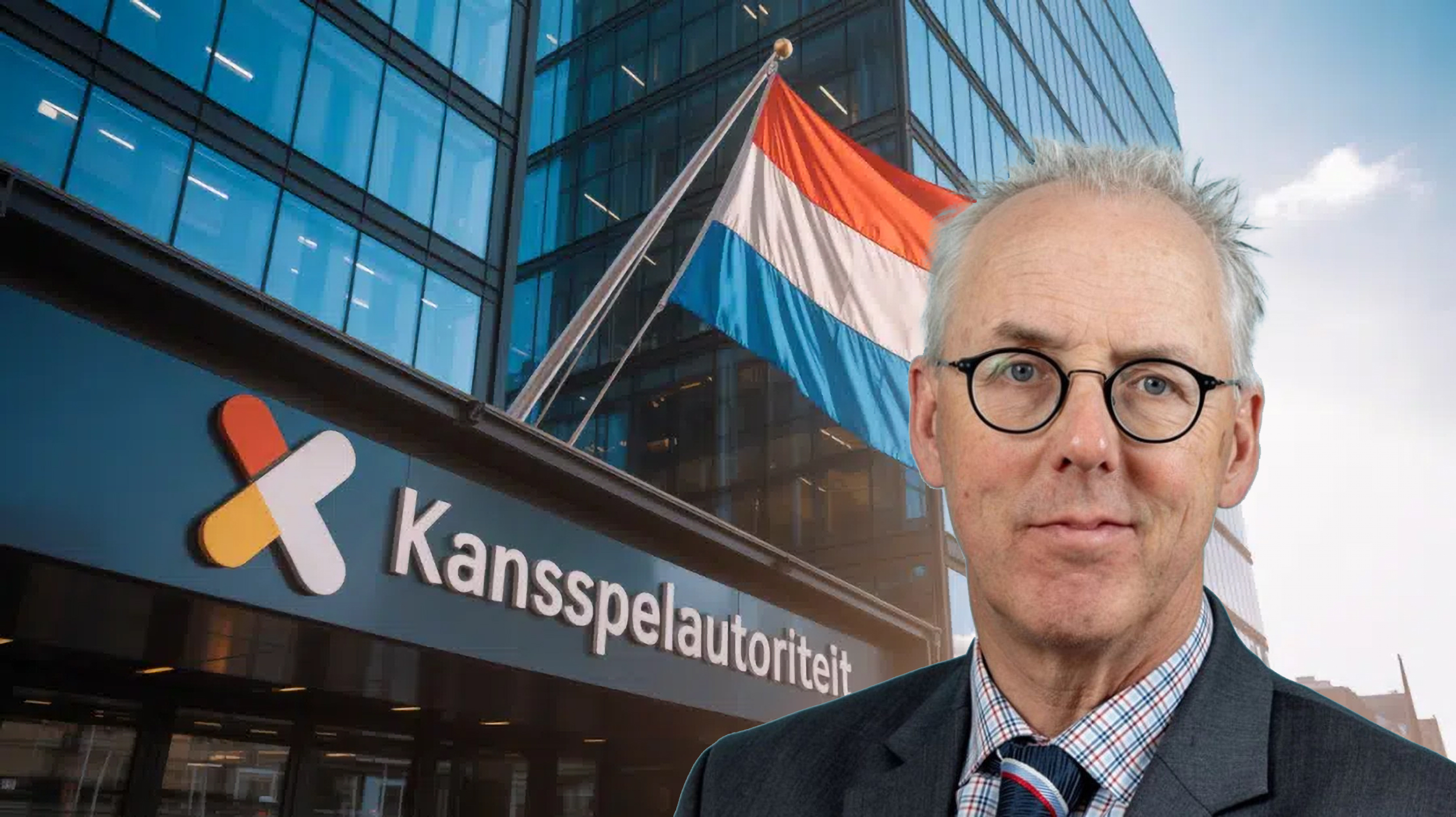
Interview Michel Groothuizen, Chair of KSA and Board Member of GREF
Introduction
Having liberalized to great acclaim a few short years ago, Kansspelautoriteit (KSA) recently went public with a statement that channelization rates had fallen below 50 percent. We asked its chair about regulation and reality in Netherlands’ iGaming, how the country got here and his hopes to turn the tide.
Simon Planzer: When the Dutch regulated market opened five years ago, there were very high expectations from various stakeholders, including the industry. The Dutch regulation was widely welcomed and applauded for being progressive and introducing a liberal licensing system. You were not in post at that time, but can you describe the expectations of the market and how the KSA saw it back then?
Michel Groothuizen: I was not with KSA, but coincidentally, a decade earlier, in around 2010, I was the Policy Director in the Ministry of Justice here in the Netherlands. There I was responsible for the gambling law that was already being written. Even at that time, people had been working on it for five or six years. The process of creating the law was a very long one and that had some specific consequences. At the start of the process, while the internet was more or less fully developed, the smartphone was not and so the impact of the smartphone was not taken into account in the law.
In 2010, our picture of online gambling was of people sitting behind a desk or at their living room table but always using a computer. What we now know is that the smartphone has become the dominant way to gamble online. That was a real game changer that we did not really foresee and honestly, when you speak with Dutch politicians, even now, they do not always realize that within three clicks on your smartphone, you can play every game you want. For those of them who do not gamble themselves, they have no idea that that’s the reality. So, that makes framing a law somewhat difficult.
SP: Did that mean they were surprised by how the market developed?
MG: I think you could say that. After the market opened up it attracted commercial companies to enter the competitive arena, and everyone wanted to win as big a market share as possible. Quite understandable. But the consequence of that struggle was that licensees ran very aggressive and widespread advertising campaigns. Wherever you were in the Netherlands, whether it was at a bus stop or on television or on social media there was blanket advertising for gambling and gambling companies. That was something new for the Netherlands, something we were not used to. It was probably the biggest explosion of advertising for a single sector that we have seen. Everyone from young children to old people were confronted with it, and that completely changed the perception of what was going on. It created a backlash in the media and in among the public, and especially in the minds of politicians and policy makers. They said, this is out of control, we have to stop it. So, the atmosphere that was initially so positive in the Netherlands towards the regulated market has turned into the situation where Dutch politics is today
SP: Looking back, it’s clear to see that heavy advertising that the population at large is suddenly exposed to would have a negative impact, but do you see other factors that have also affected the atmosphere?
MG: Indeed, at the same time there was a very big growth in market. If I can give you some approximate figures, five years ago the total revenue from gambling tax was about €400 million and within five years, that figure reached €1 billion. So it more than doubled in just a few years. And the massive growth of the industry was only in the online sector: land-based casinos are static or in decline in the Netherlands. This is not so surprising. Other industries have been affected by the internet and smartphones: we have fewer sex shops, fewer cinemas. Of course, during Covid all land-based establishments were closed and people had to go online if they wanted to gamble. They also had a lot of time on their hands and this drove the online gambling market. We expected that land-based casinos would bounce back after Covid and up to a certain level that happened, but they never recovered to their former levels. Habits had changed and we have seen this in many areas but the effect was that not only did online gambling grow it also displaced the land-based sector in a kind of cannibalization effect.
SP: You mentioned the game changing role, of the smartphone and mobile devices in general. Are there aspects that are missing in that regard, in the Dutch primary law or secondary law nowadays?
MG: I think so, yes. For instance, the law came into force at a point in time when freedom of the internet was considered and appreciated very highly, perhaps naively. Since then, whether as a result of child pornography or the distribution of terrorist materials, our views have changed. This has had one very practical result. If I look at my Danish or French colleagues, they have been able to act quickly to take down hundreds of illegal sites. In Holland, while it’s not impossible, it can take us nearly a year, and as a consequence, it’s completely valueless for us. It has no practical use.
How to create a well-managed regulated gambling market
SP: There are two dimensions to the challenge of creating and sustaining a well-managed regulated gambling market. The first gets the headlines and that is tackling the black market. But the second is all too often forgotten and that is to create a licensed market that is attractive to operators and their customers. Do you agree? And if you do, could you comment on the tax increase that was agreed by Dutch politicians against the express recommendations of the KSA.
MG: Yes, this is something that’s really worrying us. The revenue from gambling tax was so tremendous that the civil servants in the Ministry of Finance thought, it’s an easy catch. They assumed, with a sector that was growing so much with massive profits, that it would be easy to get a bit more. That’s the reason that they proposed a tax hike from around 30 percent to almost 38 percent. I’m really afraid that for many operators, especially the land-based sector which was already working at marginal profitability, this will be the final blow for many of them. Already we see that many are just disappearing: around 20 percent of local gambling outlets have closed down.
For the online sector, it’s different. Their cost structure is not the same, and they will manage to survive. But, the difference between a weakened legal sector and the illegal sector operating without these restrictions is becoming bigger and bigger. So that’s one thing that worries us and this is likely to actually reduce the tax take from online gambling overall.
SP: Are there other areas where you feel policy makers are working against the common objectives of organizing a successful licensed market?
MG: Over the past 2-4 years we have come up with quite a lot of measures which have had a big impact. But at some point this becomes more complex. In the Netherlands, we just passed legislation limiting the maximum stake to €700 per month per operator. As a result, we now see that average losses per person have reduced from more than €160 per month to around €115, so a third less. From a policy view, that’s good news: people are losing less. But the combination of these policy measures, the tax hike and the stake limits have made it very difficult for the sector.
I must emphasize that over 90 percent of people still gamble exclusively in the licensed market, but what we are seeing this year for the first time is that over half the total money staked went to the illegal sector. This is a big shift to the illegal market. The data is not perfect ,but it seems clear that the bigger gamblers have left the legal market and gone to the black market.
SP: So, it seems clear this combination of legislative measures has harmed the regulated market in the Netherlands. How much responsibility do the licensed operators bare for the situation and what could they do to help bring about a more positive atmosphere towards gambling?
MG: We have already talked about the tidal wave of advertising and how that turned people off gambling, but the lessons are still not being learned in, for example, duty of care which is a core objective of Dutch regulation. To give an example, last week, we published a fine of €4 million against a licensee for failures in player protection and duty of care. The party concerned responded publicly by saying we disagree with the KSA, we think everything was really open back then, so we don’t think we broke any rules. Now, that may be an argument to make in court but to say it in public looks like they only care about the money and not the player.
It may be true that the fine relates to a period before rules were tightened, but to try to explain that to a Dutch audience looks like the operator has missed the point. The original legislation was deliberately open and relied on operators to set standards of behavior. Successive enforcement actions have added layers of interpretation of rules and ultimately rules were tightened at their request to make the situation clear. That doesn’t mean it was a free-for-all up to that point. That was never the intention.
I understand, as an individual operator, they have to survive in a competitive market, yes, but as a group, the result has been that tolerance for the gaming industry has diminished a lot and they have to share responsibility for that.
SP: Are there positive things that the industry is doing and could do more to help the situation?
MG: I think that at a certain level, the industry is helping. For the first time, we have managed to create a kind of alliance, an independent body, with representatives from government, the industry, affiliates, payment service providers and other partners to fight illegal operators. I’m not sure this is the complete answer but the politicians I speak with are enthusiastic about it. The industry certainly has the same objective, but we have a lot of ground to make up.
The second dimension: the black market
SP: That brings us on to the second dimension, that of the black market. You have made some interesting and quite radical suggestions recently about how the industry as a whole, how regulators internationally can work together, can take various actions, perhaps even an Interpol for gambling, to tackle the black market. Perhaps you could expand on that area for us.
MG: Individual regulators have limited capacity and this is completely normal. Indeed, it would be strange if we had unlimited resources. But this doesn’t have to be the end of the story. We know, for instance, that of the 20 biggest illegal operators targeting the UK, six of them are in also in our top 10. That’s the same for many European markets: we are up against common adversaries. So, if our British, Swedish, Danish or Italian colleagues have already investigated a company and collected evidence about how it operates, it could be very helpful if we are also able to use this material in our courts.
I am a board member of GREF, the Gambling Regulators European Forum and a member of IAGR the International Association of Gaming Regulator. It is not always made public, but we already share a lot of information, but not information which is so much more sensitive. Of course, we would need assurances that we are allowed to do so and that our politicians and our judges will find it acceptable. I do think it would make us much more effective if we could exchange information in ways that Europol or Interpol do in the world of criminal justice.
SP: What barriers do you face in achieving such information sharing?
MG: I honestly don’t know yet whether this will be possible or what barriers we might come up against. It could be many years before we get effective Europe-wide agreements, but I would like to try and see if we can be effective, to see if such an approach will be accepted in our courts and that we can go beyond borders. It may not be possible, but I will at least try. And I know that regulators in other countries are willing to do the same and see the need to try.
SP: One of the other approaches to tackling the black market is to target the infrastructure around them: the service providers, the payment providers, the big tech platforms, is that something that you’re also considering?
MG: Yes, in our organization we have a big program we call Disconnect designed to do exactly that, to disconnect the client from the operator. It is working in all the ways you mentioned and with each part of the economic ecosystem that the black market relies on. We are also looking for collaboration with, for instance, legal affiliates who are taking a responsible approach to promotion of gambling and working only with the licensed sector. We are talking with them about some kind of recognition or stamp that shows they are a trusted partner. We haven’t done that kind of thing so far, but we are at least discussing whether that could be a way.
SP: Service providers to the industry are in a competitive market, but they also provide their services, their platforms, their game designs, to both the onshore and offshore markets What’s your view on recruiting the service providers to the battle against the black market?
MG: It would be helpful to do this on an international or a European level, but the present situation is not like that. While we might want to act, we have just one general article in our gambling law forbidding the promotion of illegal gambling. It is quite a stretch and could be seen as disproportionate to use that against payment service providers. So, for that reason, we are encouraging collaboration on a voluntary basis. Does this work? Well, the tech firms and the banks are not exactly looking for ways to support me, but for a Dutch bank, it could be bad for their reputation if they’re not willing to do at least something if illegal operators are seen as a danger to vulnerable groups such as young people, for instance. So while they’re not really eager cooperate, they might fear the risk to their reputation if they are not seen to be helping.
Obviously working with a Dutch bank is easier than influencing the big tech companies like Google, Meta, etc., but this is a challenge that everyone in Europe is facing, not only in our field. The power of these big tech companies is something that has to be tackled at a governmental level.
Looking to the future
SP: We recently researched a piece on influencer marketing in gambling and quoted a report into influencers which found they almost universally believe that crypto casino is the future. With trends like this, do you think it’s better or at least inevitable that crypto transactions are brought into the regulated market?
MG: I think we’re getting there as we see that some crypto wallets and coins are now safe, regulated, and controllable. So with my colleagues at the KSA, we do consider regulated crypto is a conceivable model in the long term. However, at this moment there are still an incredible number of complications, and a large part of the crypto market still presents too many challenges, for example regarding the traceability of the origin of the funds.
I do think crypto is an interesting feature, and if we look at the attractiveness of the legal offering, we will have to do something about it long term. But legally it is not yet allowed, the political arena may object, and in practice there are still complications.
SP: Coming back to where we started, are you optimistic that the tide can be turned and the regulated market rejuvenated?
MG: I think if we look at the market, we do see we are at some kind of turning point. But I do believe the market is still viable and the regulated market can be brought back to full health.
Simon Planzer is Founder at Planzer Law. He was in conversation with Michel Groothuizen